A Call to Action!
Historic 107 Jessup Avenue Faces Demolition.
107 Jessup Avenue, built in 1899, and listed in the National Register of Historic Places as a contributing property in the Quogue Historic District, is one of Quogue’s most significant historic houses.
It is under contract for sale to a developer — who plans to demolish it.
Send a letter to the Mayor and Trustees — say NO to demolition!
Jessup Manor (1899–1920) / Shinnecock Arms (1920–1981)
A “Contributing” property in the Quogue Historic District (2016) Listed in the National Register of Historic Places
Overview
107 Jessup Avenue is a unique survivor in the Village of Quogue. Built in 1899, it was a Black and Shinnecock family’s home (Jessup Manor) that became one of Long Island’s few summer resorts listed in The Negro Tourist Green Book (Shinnecock Arms). Along with St. Paul’s A.M.E. Zion Church, it remains the last vestige of a vibrant Black community that began in the mid-19th century and grew for more than a century.
Few properties in Quogue can demonstrate historic significance across so many themes. In a single building, Black, Shinnecock, and regional history converge.
- A rare surviving home of a Black and Shinnecock family in Quogue (Jessup Manor). Abram Edwin Enos purchased the property and built the house in 1899. He was the grandson of a freed enslaved man who owned land in Quogue as early as 1841. Jessup Manor remained in the Enos family for 50 years. The family is buried in the Quogue Cemetery.
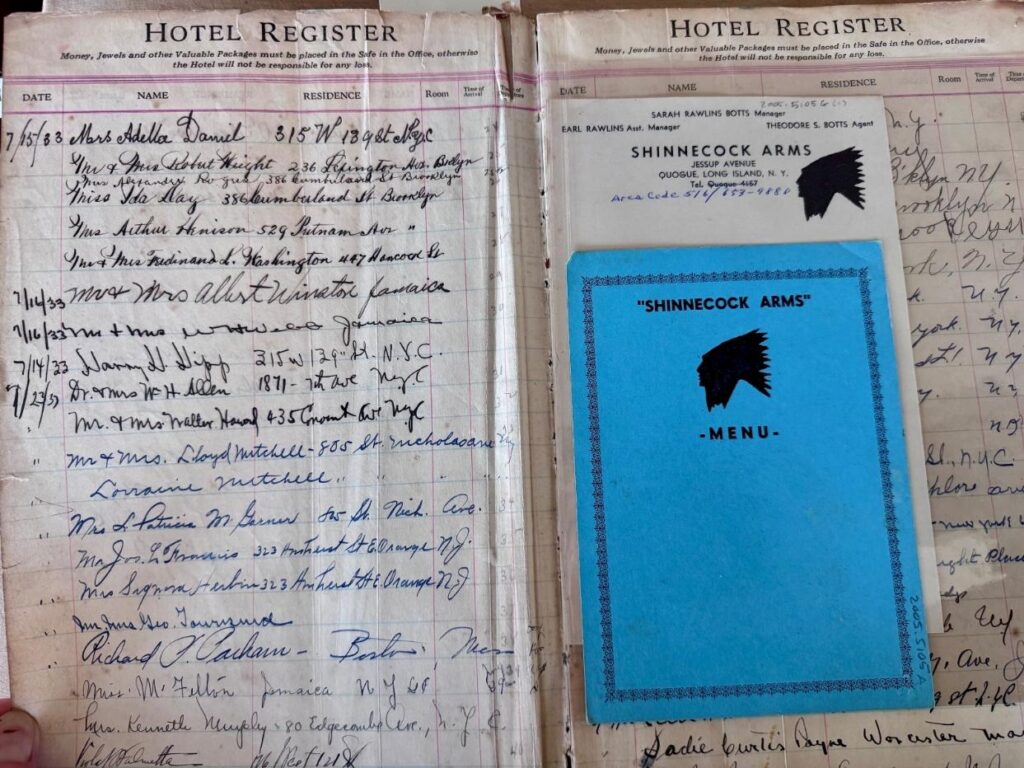
- A boarding house for domestic help (Shinnecock Arms). Following Enos’s death, in 1920, his daughter renovated the house and ran it as the Shinnecock Arms, lodging the domestic workers who accompanied summer visitors to the village.
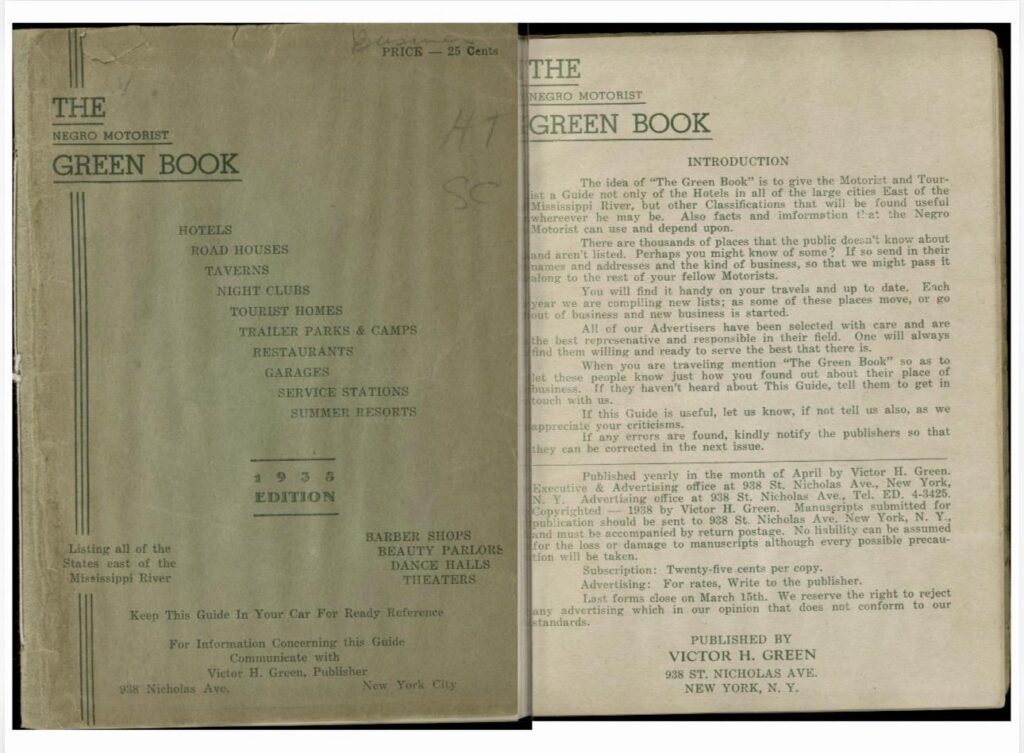
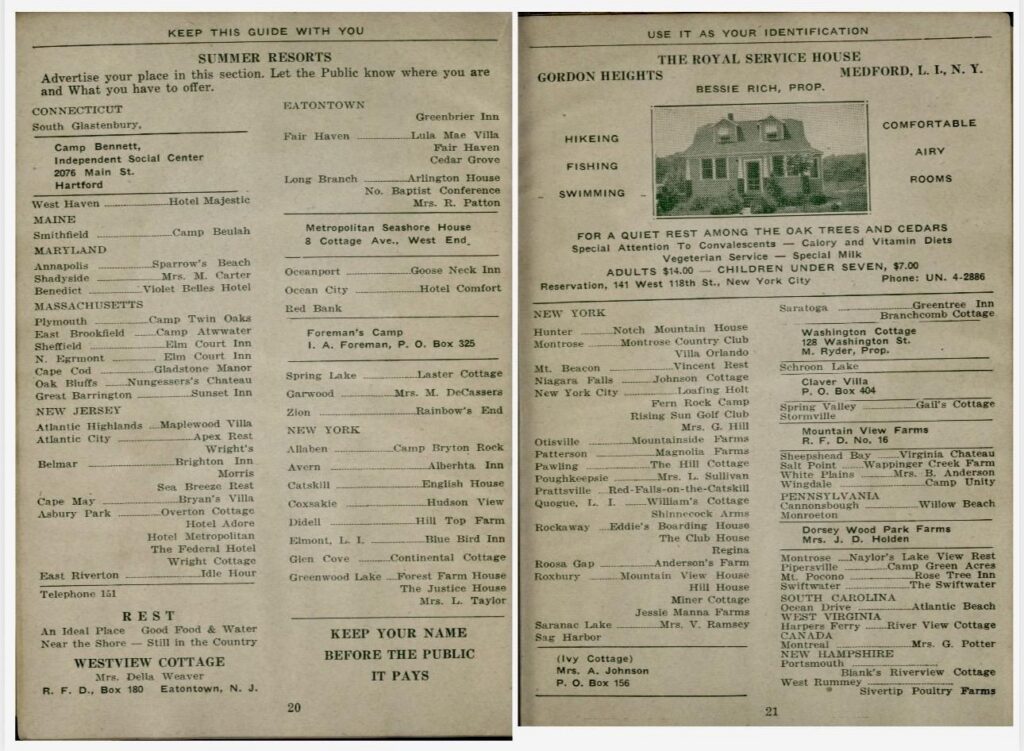
- A summer resort listed in The Negro Motorist Green Book during the Jim Crow era. As the Shinnecock Arms, it appeared in The Negro Motorist Green Book in 1938 — the guide’s first year listing summer resorts. In 1954, was called “the oldest summer hotel for colored people on Long Island.”
- Shinnecock and Indigenous history. Abram Enos’s wife, Mary Nancy Lee, was Shinnecock and helped found what became St. Paul’s A.M.E. Zion Church, in 1922. The church and this house remain the only two surviving landmarks of Quogue’s vibrant Black community.
- Father James Lee was an escaped enslaved man from Maryland. Garrison, his youngest son, was named after abolitionist William Lloyd Garrison. He became a pastor on the Shinnecock Reservation.
- A Shinnecock whaling legacy. Mary Nancy Lee’s five brothers were skilled Shinnecock whalers, renowned in the 19th century — highlighting the prominent and essential role those with Shinnecock heritage played in the industry that shaped Long Island.
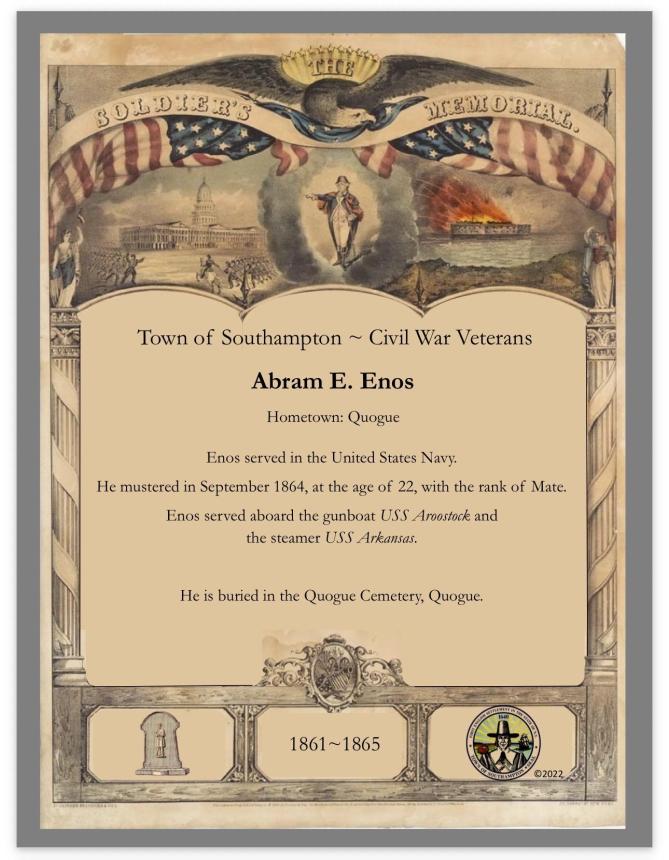
- The Civil War. Abram Enos served in the U.S. Navy during the Civil War — one of nine Quogue men documented to have done so.
- Landmark 1899 architecture. The building’s exterior remains a virtually intact example of its era: a three-bay, Mansard-roofed Second Empire house that retains its original six-over-six window sashes, attic dormers, and slender-columned front porch.
A full history of 107 Jessup Avenue follows.
History
107 Jessup Avenue, Quogue
The 1899 Jessup Manor / Shinnecock Arms is of great cultural and architectural significance in the history of Quogue. Along with St. Paul’s A.M.E. Zion Church, on Montauk Highway, it remains the last vestige of a vibrant Black community that began in the mid-19th century and grew over a century and more to include properties from Old Main Road to Old Meeting House Lane north of Montauk Highway.
107 Jessup Avenue, built in 1899, is listed in the National Register of Historic Places as a contributing property in the Quogue Historic District. It survives as an intact example of its era: a three-bay Mansard roofed Second Empire style dwelling. The exterior is clapboard-sided and retains attic dormers, original six-over-six window sashes. The porch, supported on slender columns, further distinguishes the house.
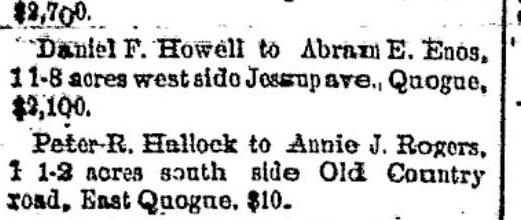
In 1899, Abram Edwin Enos (1845–1920) purchased the property at 107 Jessup Avenue and built a two-story home for himself and his family (Jessup Manor). It remained in the Enos family for 50 years.
Abram Enos was the grandson of Buell’s Enos (Enos Buell), a freed enslaved man. Enos Buell owned land in Quogue as early as 1841.
Abram’s wife, Mary Nancy Lee, was a Shinnecock, and according to an oral history by the Enos’s granddaughter, Muriel Barnes Rains, “… became an influential figure in the Quogue community, playing a key role in the establishment of the Presbyterian Mission Church on North Jessup Avenue.” The Mission Church grew into St. Paul’s A.M.E. Zion Church, c. 1922.
Abram Enos’s wife’s mother, Roxanna Bunn, was also a Shinnecock and her father, James Lee, was an escaped enslaved man from Maryland. Roxana and James named their youngest son Garrison after abolitionist William Lloyd Garrison. James Lee converted to the Second Adventist Church and officiated as that church’s pastor on the Shinnecock Reservation.
Roxana and James Lee’s five sons composed the most illustrious Shinnecock whaling family of the 19th century. Their success reveals much about the significance of whaling in the economy and culture of the Shinnecock community and reflects developments in Long Island and American whaling history more generally.
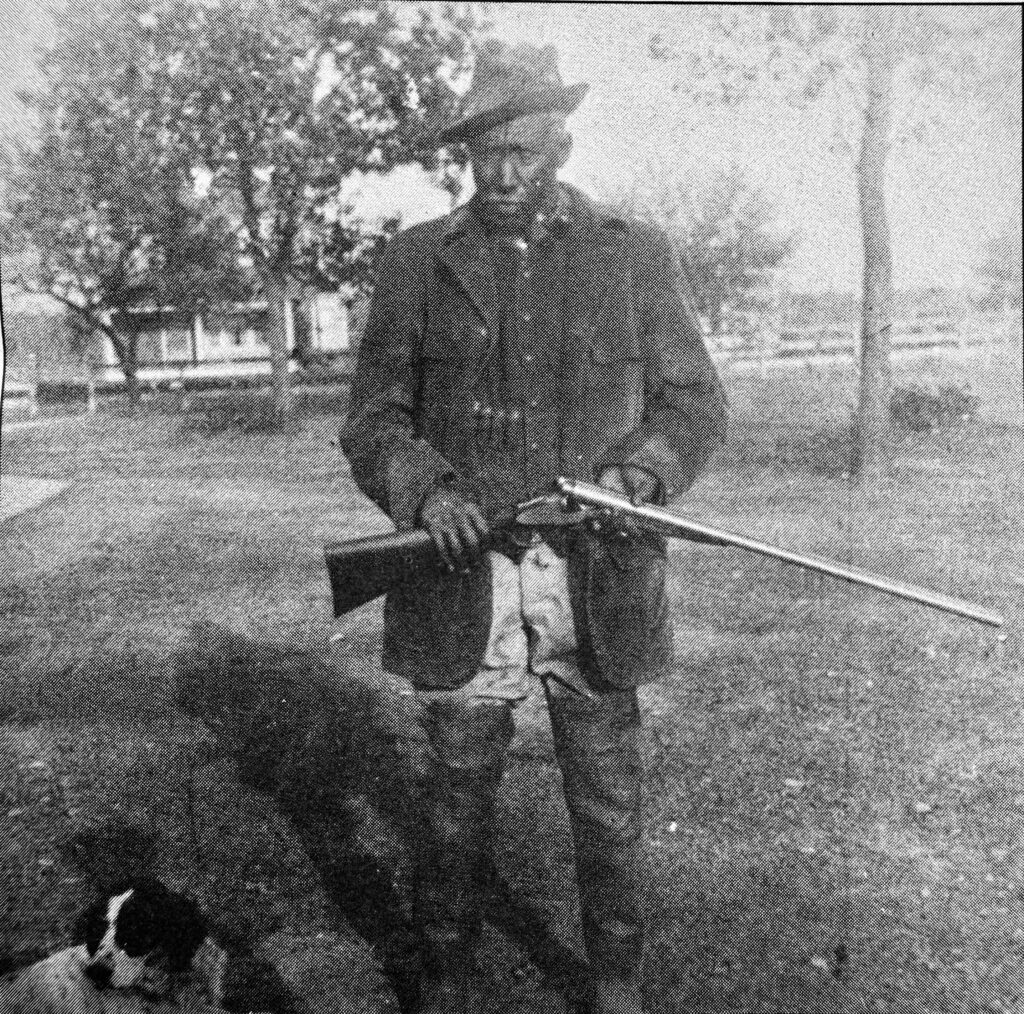
Abram Enos served in the U.S. Navy during the Civil War. He died in 1920 and is buried in the Quogue Cemetery, as are his family members.
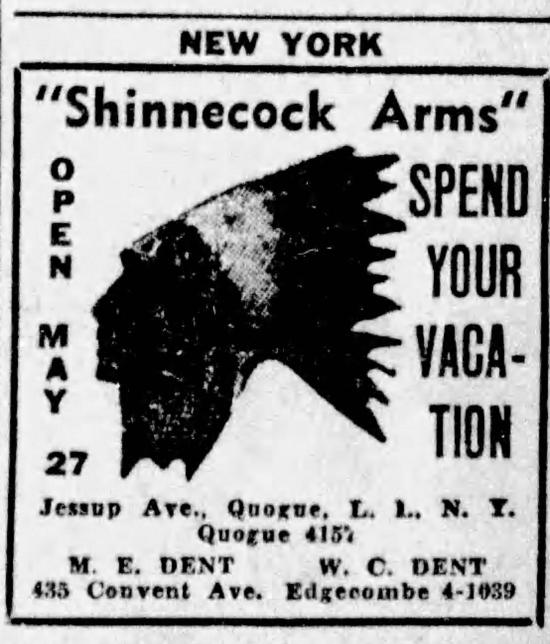
Following Enos’s death, daughter “Tillie” added a third floor to the Enos home and for almost 30 years operated it as the Shinnecock Arms, a boarding house/hotel to accommodate domestic help of summer visitors. Tillie was a schoolteacher and ran the Shinnecock Arms during the summer months. She was married to William C. Dent (1891–1974).
In 1938, its first year listing summer resorts, The Negro Motorist Green Book included the Shinnecock Arms and William’s Cottage in Quogue. (William’s Cottage was likely named after Tillie’s husband, William Dent). Sag Harbor’s Ivy Cottage was the only other resort listed on Long Island. Quogue added several other safe lodgings over the next 30 years. Publication of The Green Book ended in 1966, following the passing of the Civil Rights Act in 1964.
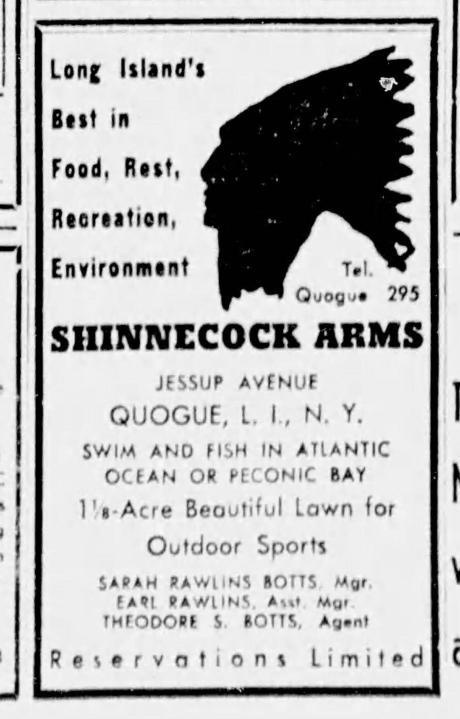
Tillie and her husband sold the Shinnecock Arms to Sarah Rawlins Botts, c. 1947, who ran the boarding house with her son, Earl, from her first marriage to Dr. E. Elliott Rawlins. Dr. Rawlins was a prominent physician known as “Harlem’s Health Evangelist,” affecting change during the Jim Crow era. He was instrumental in the integration of Harlem Hospital beginning in 1926.
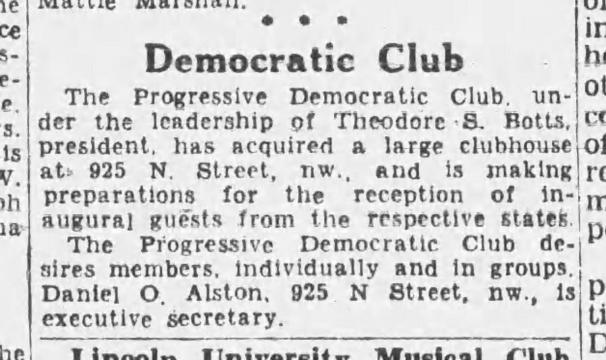
In 1939, Sarah married Theodore S. Botts, president of the Progressive Democratic Club and a civic activist in the National Consumers League, which continues today advocating for better working conditions for laborers and safer products.
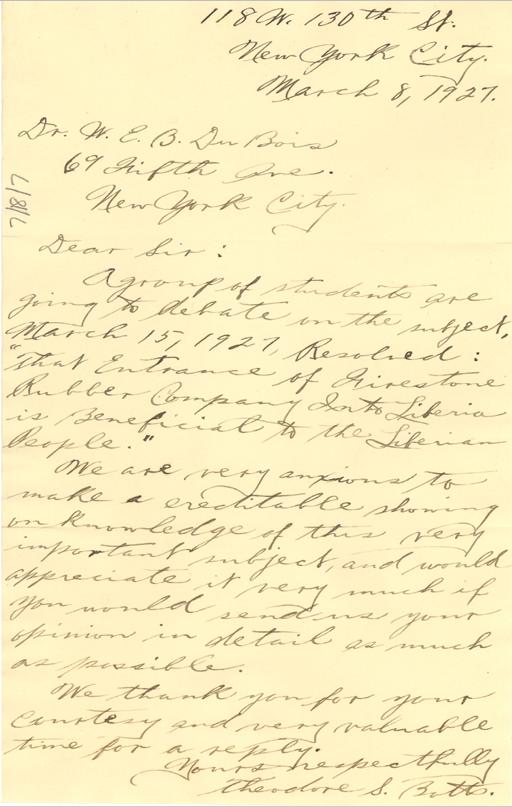
In March 1927, Theodore Botts wrote to W.E.B. DuBois asking his opinion about Firestone Rubber Company’s plans to set up headquarters in Liberia. A group of students were holding a debate on whether it would be “beneficial to the Liberian people.” (NOTE: W.E.B. Du Bois’s relationship with Liberia was defined by his lifelong dedication to Pan-Africanism and Black sovereignty, as he viewed the country as a vital symbol of independent Black self-governance. His engagement spanned from diplomatic missions to political defenses of Liberian sovereignty against European and American imperialism.)
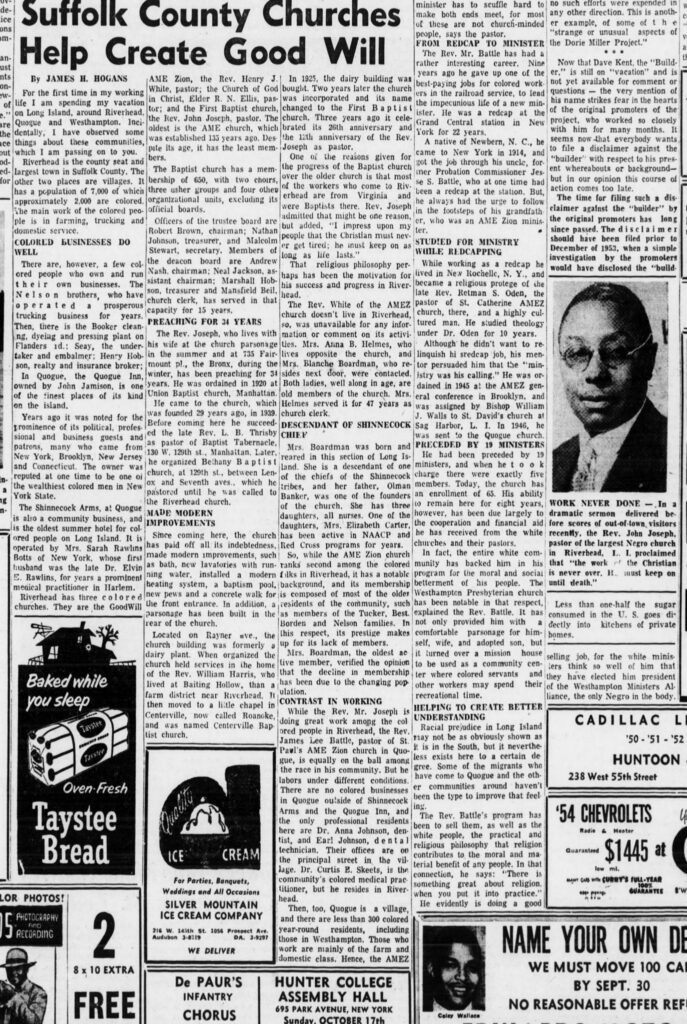
In 1954, according to an article in The New York Age (September 25), the Shinnecock Arms was “… the oldest summer hotel for colored people on Long Island.”
The full article, attached at the end, has additional information on the Shinnecock Arms, as well as the Black community in the 1950s, including the Quogue Inn and St. Paul’s A.M.E. Zion Church.
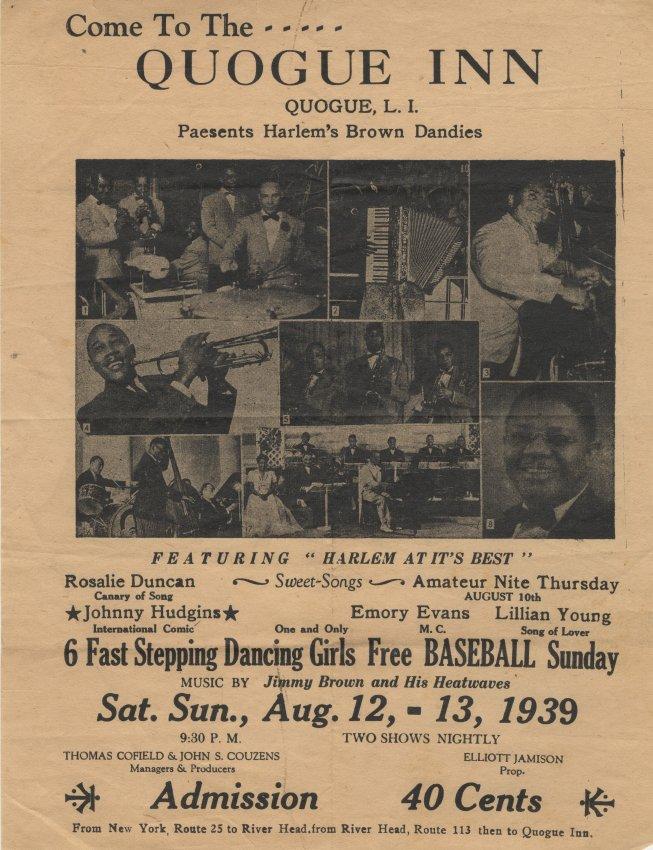
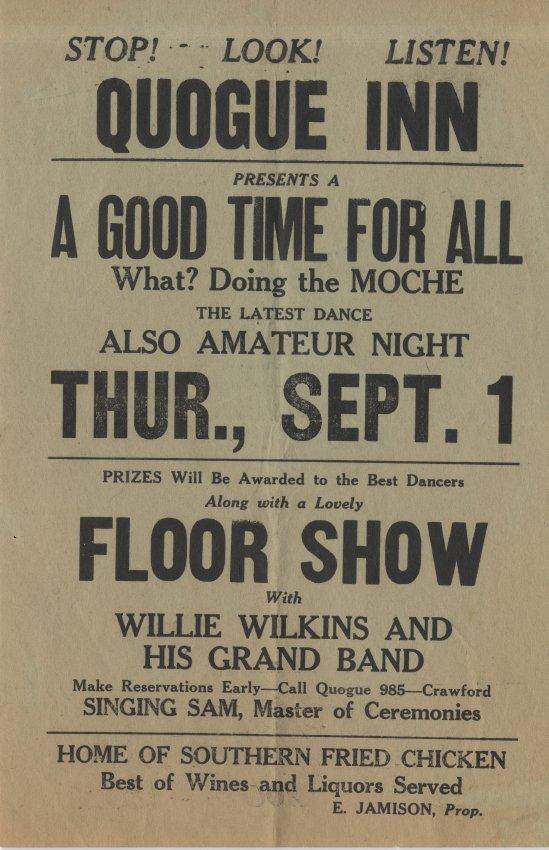
“In Quogue, the Quogue Inn, owned by John Jamison, is one of the finest places of its kind on the island. Years ago, it was noted for the prominence of its political, professional, and business guests and patrons … . The owner was reported at one time to be one of the wealthiest colored men in New York State.”
Note: John Jamison also owned and operated the Wells Hotel, considered among the best that admitted Blacks.
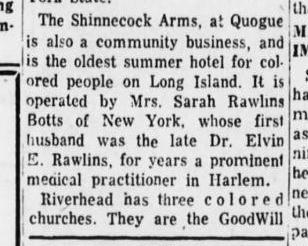
“The Shinnecock Arms at Quogue is also a community business and is the oldest summer hotel for colored people on Long Island. It is operated by Mrs. Sarah Rawlins Botts of New York, whose first husband was the late Dr. Elvin E. Rawlins, a prominent medical practitioner in Harlem.”
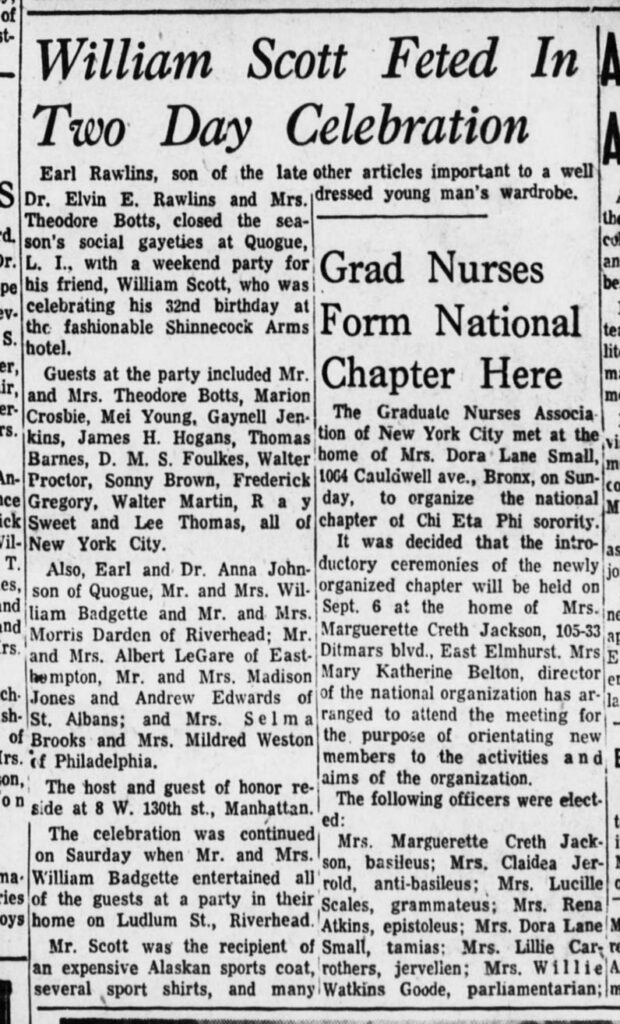
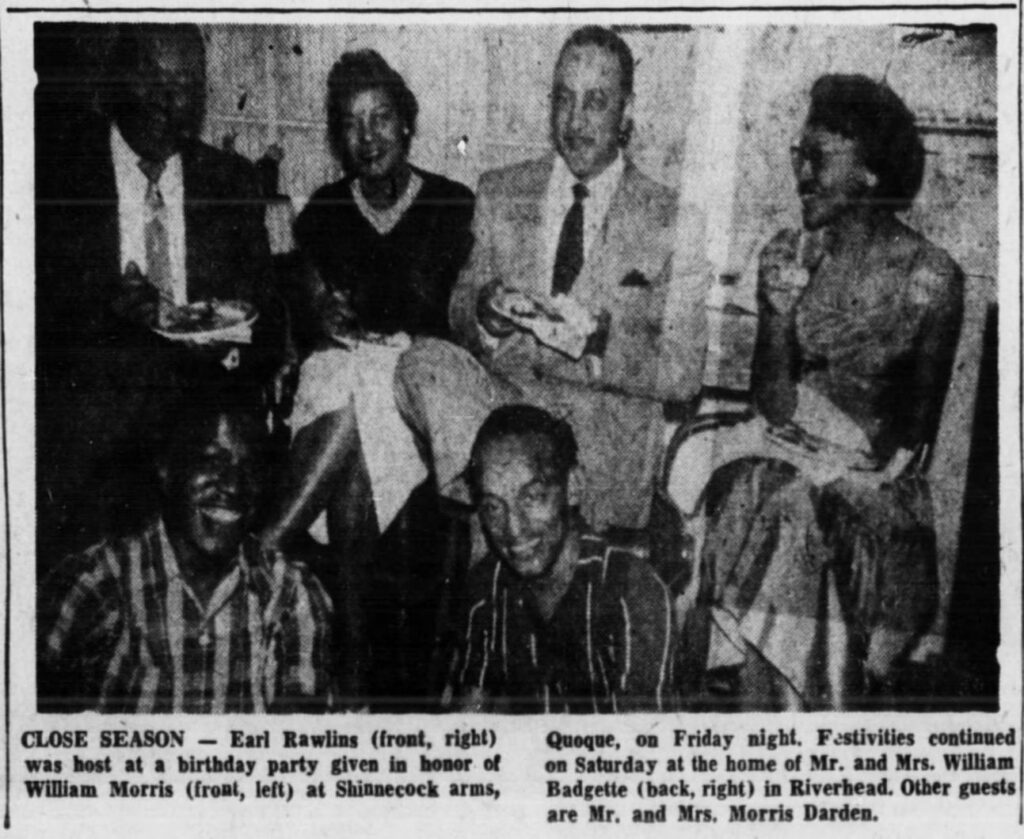
On September 24, The New York Age reported, “Earl Rawlins, son of the late Dr. Elvin E. Rawlins and Mrs. Theodore S. Botts, closed the season’s social gayeties at Quogue, L.I., with a weekend party for his friend, William Scott, who was celebrating his 32nd birthday at the fashionable Shinnecock Arms hotel.”
Oral History
By Muriel Barnes Rains, Granddaughter of Abram Edwin Enos and Mary Nancy Lee Enos, March 1992. The account has been lightly edited.
My grandfather, Abram Edwin Enos, was born in 1845. At 22, he enlisted in the U.S. Navy during the Civil War. His wife, Mary Nancy Lee Enos, was born on the Shinnecock Reservation, the daughter of James Milton Lee, a pastor there. My grandmother became an influential figure in the Quogue community, playing a key role in the establishment of the Presbyterian Mission Church on North Jessup Avenue. The couple had twelve children of their own and adopted two more.
The Enos family first lived on Old Main Road, near “Fairy Dell.” In 1899, Abram purchased the property on Jessup Avenue, which extended far beyond its present boundaries. At one time, it included two barns, two additional homes, and ranch grounds for horses and extended over the Haddad family’s land to the current Police Station.
Grampa had a very large farm, with pigs, hogs, cows, chickens, ducks, and many horses. He sold a great deal of food — and alcoholic beverages which he made himself. He was a vivid part of Quogue life, active in political and community affairs.
We grandchildren recall being all dressed up and taken to church in a cart pulled by two beautifully groomed goats.
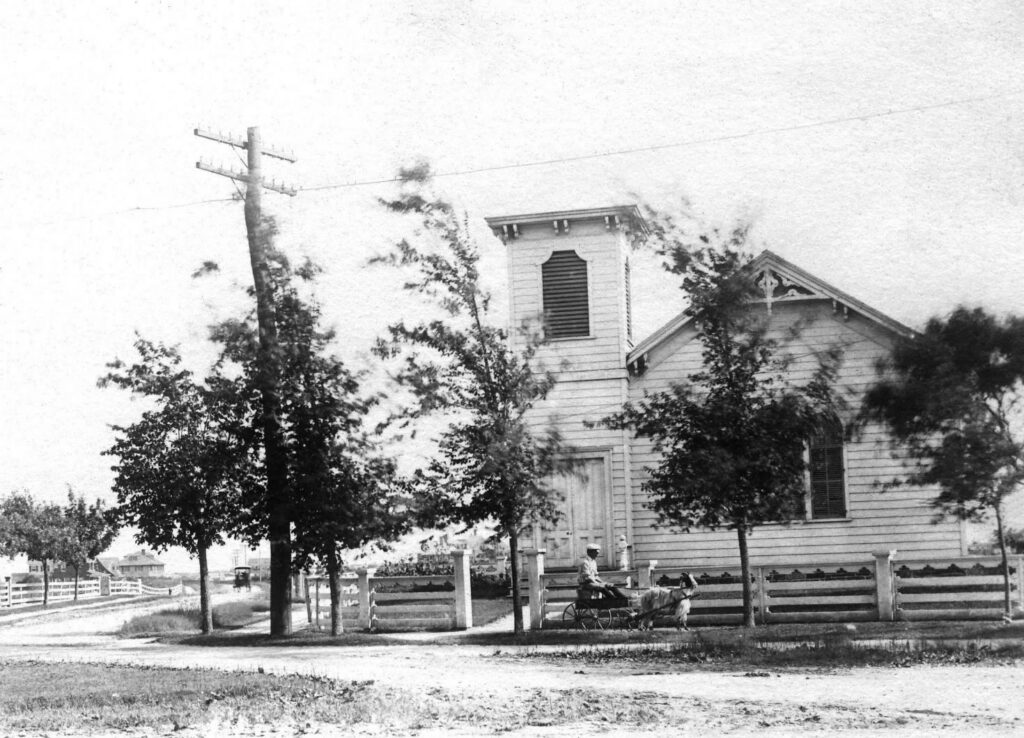
Goat-drawn Cart Passing the Presbyterian Chapel on Quogue Street, c. 1906
At the turn of the pre-automobile 20th century, goat carts were a popular mode of transportation — to get from here to there, like bicycles; to make deliveries of goods; and just for pleasure. For adults and children, too. In cities, “goat cart men” charged a fee to take “snapshots” of kids in their kid cart. One early car manufacturer, Studebaker, advertised goat carts for sale, perhaps hedging its bet.
Source Documents
Enos Genealogy
‘Buell’s Enos (Enos Buell), listed in the 1840 Census
-Apollos Enos m. Elisha Ann
–Abram Edwin Enos, m. Mary Nancy Lee (Shinnecock)
—Mathilda “Tillie” Enos m. William C. Dent